
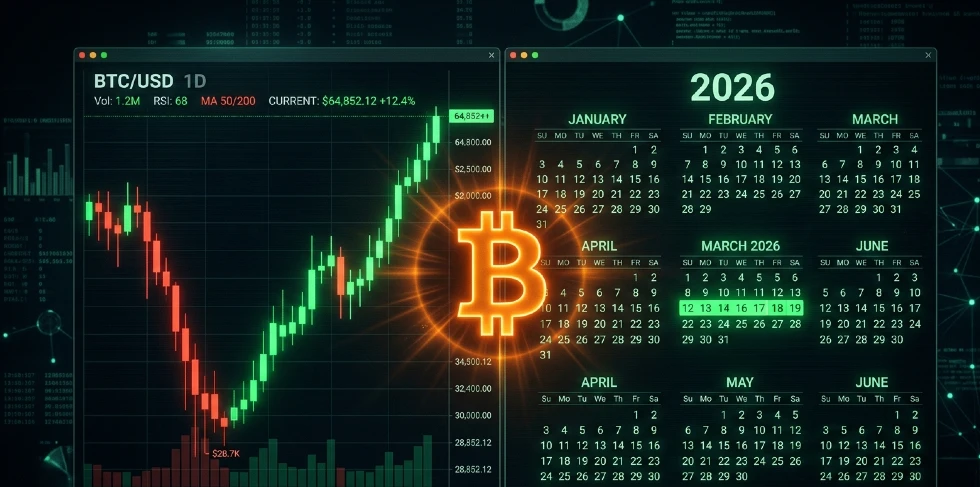
Will Crypto Go Back Up? Recovery Timeline 2026
Crypto is down. Your portfolio is bleeding. And you’re wondering if this is temporary pain or something worse. The short answer: history says it comes back — but the when and how much depends on factors most articles won’t bother to explain honestly.
- Crypto will most likely go back up in 2026, driven by the Bitcoin halving cycle, institutional accumulation, and improving macro conditions — but the timeline is 6-18 months, not weeks.
- Best for long-term holders with 12+ months of patience; worst for anyone who needs that money back fast.
- The single thing that matters most right now: whether Bitcoin holds its realized price support around $45,000-$50,000 — that’s the line separating a correction from a deeper bear.
- Biggest mistake to avoid: panic-selling during the distribution phase, then FOMO-buying when prices are already 60% recovered.
- If you need liquidity in under 6 months, stablecoins or short-term T-bills beat holding a depreciating asset while you wait.
Why Crypto Goes Down Before It Goes Up (The Cycle Nobody Explains Right)
Most people treat crypto crashes like random events. They’re not. There’s a pattern — not perfect, not clockwork, but consistent enough to plan around.
Bitcoin’s price history follows a four-phase cycle tied directly to its halving schedule. The halving cuts miner rewards in half approximately every four years, reducing new supply hitting the market. When demand stays flat or grows and supply shrinks, price moves up. That’s not speculation — that’s basic supply economics playing out on-chain.
The 2024 halving happened in April. Historically, the 12-18 months after a halving are when the biggest price moves happen. After 2020’s halving, Bitcoin ran from roughly $9,000 to nearly $69,000 by November 2021 — a 7x move. After 2016’s halving, it went from around $650 to nearly $20,000 by December 2017.
The catch? It doesn’t go straight up. There are brutal corrections along the way — sometimes 30-40% drops even inside bull markets.
So if you’re looking at today’s prices and wondering whether crypto will go back up, you’re asking the right question at the right time. The halving cycle says yes. The question is just how long you’re willing to sit.
The Real Reason Crypto Is Down Right Now
Before you can predict the recovery, you need an honest read on why prices dropped.
Three things are hitting at once in 2026:
Macro pressure. Interest rates stayed higher for longer than anyone expected. When risk-free returns (like U.S. Treasury yields) stay elevated, speculative assets like crypto compete for capital and usually lose short-term. Investors rotate out. The Federal Reserve’s rate decisions in Q1 2026 spooked equity and crypto markets simultaneously.
Regulatory overhang. The SEC’s ongoing enforcement actions against major exchanges, combined with uncertainty around the EU’s MiCA framework rollout, has made institutional allocators cautious. BlackRock, Fidelity, and ARK Invest have Bitcoin ETF products — but net inflows slowed significantly when regulatory headlines turned negative.
Leverage flush. A significant portion of this drop came from forced liquidations. Over-leveraged traders on Binance, Bybit, and OKX got margin-called, which triggered cascading sell orders. On-chain data from Glassnode showed over $2 billion in liquidations in a 48-hour window during the February 2026 dip. That’s not a fundamental collapse — that’s the market cleaning out weak hands.
If you want a deeper read on what’s behind the specific drop you’re seeing, here’s the breakdown of why crypto is crashing in more detail.
What Has to Happen for Crypto to Go Back Up
Not vibes. Not hopium. Actual conditions.
1. Bitcoin has to hold its cost-basis floor
On-chain analysts track something called “realized price” — the average price at which all Bitcoin currently in circulation was last moved. It’s essentially the market’s aggregate break-even point.
Right now, the realized price sits around $45,000-$48,000. If Bitcoin trades consistently above that level, holders are in profit on average and sell pressure stays manageable. If it breaks below, you enter genuine bear territory — not just a correction.
Watch this number more than you watch headlines.
2. Macro has to stabilize
The crypto-Fed relationship is real and annoying. Bitcoin’s correlation with the Nasdaq 100 has averaged above 0.6 during high-rate environments. For crypto to decouple and run independently, either rates have to drop (improving risk appetite) or crypto’s institutional adoption has to mature enough that it trades on its own fundamentals.
The Fed’s rate path in Q2-Q3 2026 will matter a lot.
3. ETF inflows have to resume
The Bitcoin spot ETFs approved by the SEC in January 2024 changed the game structurally. BlackRock’s IBIT ETF alone crossed $20 billion in assets in its first year — faster than any ETF in history. That institutional pipeline is still intact. When sentiment turns, those inflows can move price fast.
4. Altcoins need Bitcoin dominance to drop
Right now Bitcoin dominance (BTC’s share of total crypto market cap) is elevated — hovering around 52-56%. Historically, when Bitcoin stabilizes and dominance starts falling, capital rotates into Ethereum, Solana, and lower-cap altcoins. That rotation phase is where the big percentage gains happen.
The Recovery Timeline: What’s Actually Realistic in 2026
Here’s where I’ll be straight with you instead of hedging everything into uselessness.
3-6 months out (Q2-Q3 2026): Accumulation phase
This is the boring part. Prices chop sideways. Smart money accumulates. Retail panic-sells. On-chain metrics — like the MVRV ratio tracked by Glassnode, and exchange outflows — start turning positive before price does.
You probably won’t feel the recovery happening. That’s intentional. Big accumulation doesn’t happen at obvious bottoms with flashing “BUY NOW” signals.
6-12 months out (Q3-Q4 2026): Recovery phase
If macro cooperates and Bitcoin holds support, you’ll see a gradual grind upward — probably punctuated by sharp 15-25% corrections that feel terrifying but are normal inside recovering markets.
Ethereum tends to lag Bitcoin by 4-8 weeks, then catches up fast. Solana, Avalanche, and Chainlink tend to move faster in percentage terms once momentum builds.
12-18 months out (2027): Expansion phase
This is historically when the halving cycle peaks. If the pattern holds, Bitcoin’s 2027 window is the most statistically likely period for new all-time highs.
No guarantees. But if you asked me to bet — based on on-chain data, institutional flows, and halving history — that’s the window I’d target.
Crypto Recovery by Asset: Not Everything Comes Back the Same Way
This is the part most articles skip, and it’s genuinely important.
Bitcoin (BTC): Highest probability of recovery. Institutional backing, ETF products, established scarcity narrative. Recovers in every historical cycle. Time horizon: 12-18 months for meaningful recovery.
Ethereum (ETH): Strong fundamentals — staking yield, DeFi activity, layer-2 growth from Arbitrum and Optimism. But it has more regulatory risk than Bitcoin and moves on a slight delay. Recovery window similar to BTC but with bigger variance.
Solana (SOL): High risk, high upside. Solana’s ecosystem — Serum, Raydium, Jupiter Exchange — drives real on-chain activity. It crashed harder than Bitcoin and usually recovers harder too. Not for the risk-averse.
Mid-cap altcoins: Chainlink, Polygon, Avalanche — these have use cases but also more correlation with sentiment than fundamentals. They recover in bull phases but bleed badly in prolonged downturns.
Low-cap coins (sub-$100M market cap): Most of these don’t recover. Not “might not” — most literally don’t. The projects that survive a bear market cycle are the minority. If you’re holding speculative small caps hoping they come back, that’s a coin flip at best.
The honest truth: Bitcoin recovers. Most altcoins eventually recover if they have real usage. Speculative tokens from the last hype cycle mostly don’t.
What the On-Chain Data Is Actually Saying Right Now
Price is a lagging indicator. On-chain metrics lead.
Here’s what’s worth watching and what they mean right now:
MVRV Z-Score (Market Value to Realized Value): Measures whether Bitcoin is over or undervalued relative to its on-chain cost basis. A Z-score below 0 has historically marked generational buying opportunities. Current readings (tracked via Glassnode) are in the “undervalued” zone — not extreme, but favorable.
Exchange outflows: When Bitcoin moves off exchanges, it signals holders are moving to cold storage rather than prepping to sell. Net outflows are positive right now — meaning more BTC is leaving exchanges than arriving. That’s accumulation behavior.
Long-term holder supply: Wallets holding Bitcoin for 155+ days (LTH cohort) are at their highest percentage of total supply since 2021. These are hands that don’t sell during panic. They sell during euphoria. Right now they’re holding.
Funding rates on perpetual futures: Funding has flipped negative on Binance and Bybit, meaning short-sellers are paying longs to maintain positions. When funding is deeply negative and price stops falling, that’s often a short-squeeze setup.
None of these signals guarantee a recovery. They do suggest that the conditions for recovery are building.
What’s Different About 2026 (And Why It’s Not 2018)
People keep comparing this to the 2018 bear market, when Bitcoin fell 84% and took until late 2020 to recover. That comparison misses some important structural differences.
In 2018, there were no Bitcoin ETFs. There was minimal institutional participation. Coinbase wasn’t a public company. No major bank offered crypto custody. The infrastructure was immature.
In 2026, BlackRock, Fidelity, and Invesco all have spot Bitcoin ETFs. MicroStrategy holds over 200,000 BTC on its balance sheet. El Salvador made Bitcoin legal tender. The Lightning Network processes millions of transactions. Ethereum processes billions in DeFi volume daily.
This doesn’t mean crypto can’t drop more. It absolutely can. But the floor is structurally higher than it was in 2018 because the exits are harder — institutional investors don’t panic-sell like retail does, and they’re now large enough to matter.
If you want to understand how severe things got in previous cycles, this breakdown of the Bitcoin crash and whether crypto is dead gives the historical context.
The Worst Things You Can Do While Waiting for Recovery
Look, I’ve been there — sitting on a 50% loss, checking prices every 20 minutes, calculating how much you’d have if you’d sold at the top. It’s genuinely miserable. And that emotional state leads to the worst decisions.
Averaging down into a falling knife. Dollar-cost averaging (DCA) into fundamentally sound assets like Bitcoin and Ethereum is reasonable. Averaging down into speculative altcoins that have no on-chain activity because “it’s cheaper now” is how people turn a 50% loss into a 90% loss.
Switching between coins chasing recovery. Selling ETH to buy SOL because SOL dropped more (so surely it’ll recover more) is a gamble on timing nobody has. You end up catching neither recovery cleanly.
Checking your portfolio more than once a day. Not a joke. The research on investor behavior consistently shows that frequent monitoring leads to worse decisions. Set alerts at meaningful price levels (key support/resistance) and ignore the noise in between.
Believing influencer price targets. Twitter/X crypto influencers who confidently gave “$100K Bitcoin by December” targets are the same people now confidently giving new targets. Their track record is irrelevant to their follower count. Treat anything without on-chain backing or macro reasoning as entertainment.
If you woke up to a 50% overnight drop and are trying to understand what happened, this breakdown of overnight portfolio crashes explains the mechanics.
What Smart Holders Are Actually Doing Right Now
Not financial advice. But here’s what the behavior of experienced crypto investors typically looks like during this phase.
They’re defining their conviction level per asset. Bitcoin and Ethereum get held through cycles. Speculative altcoins get reduced if fundamentals weakened during the downturn. The question isn’t “is crypto coming back” — it’s “is this specific coin coming back.”
They’re setting DCA schedules and ignoring daily price. Buying a fixed dollar amount of Bitcoin weekly or monthly — regardless of price — historically outperforms trying to time exact bottoms. Not because it’s clever, but because consistency beats prediction.
They’re watching on-chain, not price. MVRV, exchange flows, and miner capitulation (tracked via hash ribbons on Glassnode) tell you more than a candlestick chart. When miners start turning their rigs back on after capitulating, you’re usually near a bottom.
They’re not predicting — they’re preparing. The people who do best in recoveries don’t catch the exact bottom. They have a plan: what to hold, what to sell into strength, and what percentage gains trigger taking profit. That plan gets made now, not when prices are already 80% recovered.
The Altcoin Question: Will They Go Back Up Too?
Depends on what you mean by “altcoin.”
Ethereum’s case for recovery is strong. Real adoption metrics — Uniswap volume, Aave TVL, Lido staking deposits — stayed relatively stable even during the price decline. That’s the sign of infrastructure, not speculation.
Solana had a brutal 2022 tied partly to the FTX collapse (Sam Bankman-Fried’s Alameda Research was a major SOL holder). It recovered significantly in 2023-2024. The question is whether the Solana ecosystem — Phantom wallet, Jupiter Exchange, Tensor NFT marketplace — has enough real users to justify another run. On-chain data suggests yes, cautiously.
For everything below the top 20 by market cap: each one needs its own fundamental analysis. Is the development team still active (check GitHub commits)? Is there real on-chain activity (check blockchain explorers directly)? Is there a use case that exists outside of speculation?
Most don’t pass that test. A lot of coins from the 2021 bull cycle simply aren’t coming back — the teams moved on, the hype evaporated, the liquidity dried up.
To understand the bigger picture of where the market is headed long-term, this look at the future of crypto and its risks is worth a read.
How Long Should You Actually Wait?
Real talk: if you’re asking this question, you’re probably in loss territory and hoping for a timeline that makes the pain feel temporary.
Here’s the honest answer by scenario:
If you’re down 20-40% on Bitcoin or Ethereum with a 1-2 year horizon: history strongly suggests you’ll recover and then some, assuming the halving cycle plays out.
If you’re down 60-80% on speculative altcoins: recovery is possible but not guaranteed. The question is whether the project has fundamental activity or is basically waiting for a new wave of retail buyers who may never come.
If you need the money within 6 months: Don’t wait. Crypto recovery timelines don’t accommodate short-term cash needs. Taking a 30% loss now hurts less than taking a 50% loss in three months if macro conditions worsen.
If you’re holding long-term: The data from previous cycles — 2015, 2018, 2022 — shows that Bitcoin and Ethereum were all significantly higher 2-3 years after their respective bottoms. That pattern is not guaranteed to repeat, but it’s the strongest track record in the asset class.
Why Crypto Price Doesn’t Just “Go Back Up” Uniformly
One more thing people get wrong: thinking of “crypto” as one thing.
When Bitcoin recovers, it often recovers first. Then Ethereum. Then large-cap altcoins. Then mid-caps. The small-caps that moon last — if they moon at all — also crash first and hardest when the cycle turns.
The investors who got burned worst in 2022 weren’t Bitcoin holders — they were people who bought Shiba Inu, LUNA, Celsius Network tokens, and other speculative assets near their peak. Bitcoin fell 65% from its high. LUNA fell 99.9%. That’s not the same thing.
So when you ask whether crypto will go back up, be specific. Bitcoin probably will, based on historical precedent and structural factors. Your specific bag? That needs a separate, honest analysis.
If you’re seeing daily drops and wondering whether this is a temporary dip or the start of something worse, this breakdown of why cryptos are falling today gives a real-time read.
Your Action Plan for the Next 30 Days
Don’t wait for the “perfect” signal. Do this now:
Audit your holdings this week. For each coin, answer: Is the team still building? Is there on-chain activity? Would I buy this today if I didn’t already own it? If the answer is no — especially that last question — that’s your signal.
Set your buy levels for Bitcoin and Ethereum. Not a vague “buy the dip” plan — actual dollar amounts at actual price levels. $44K Bitcoin? $45,500? Write it down. Automate it if you can via Coinbase, Kraken, or a hardware wallet DCA tool.
Get off leverage completely if you’re still in it. You can’t wait out a recovery if a liquidation wipes you out first. Spot positions survive corrections. Leveraged positions often don’t.
Set a 12-month “check back” date. Seriously. If your thesis is a halving cycle recovery, the thesis plays out over 12-18 months. Stop checking if it’s working after 3 weeks.
The market doesn’t care about your timeline. But if you can match your strategy to the actual cycle length, you’re already ahead of most people who are watching price charts every hour wondering why nothing has happened yet.
Want to understand today’s specific drop before making any moves? Start with why crypto is tanking today — it covers the real-time factors moving the market right now.


![How to Build a Crypto Risk Management Checklist for Beginners [2025]](https://thedawncrypto.com/wp-content/uploads/2026/03/Crypto-Risk-Management-Checklist-for-Beginners-660x470.webp)