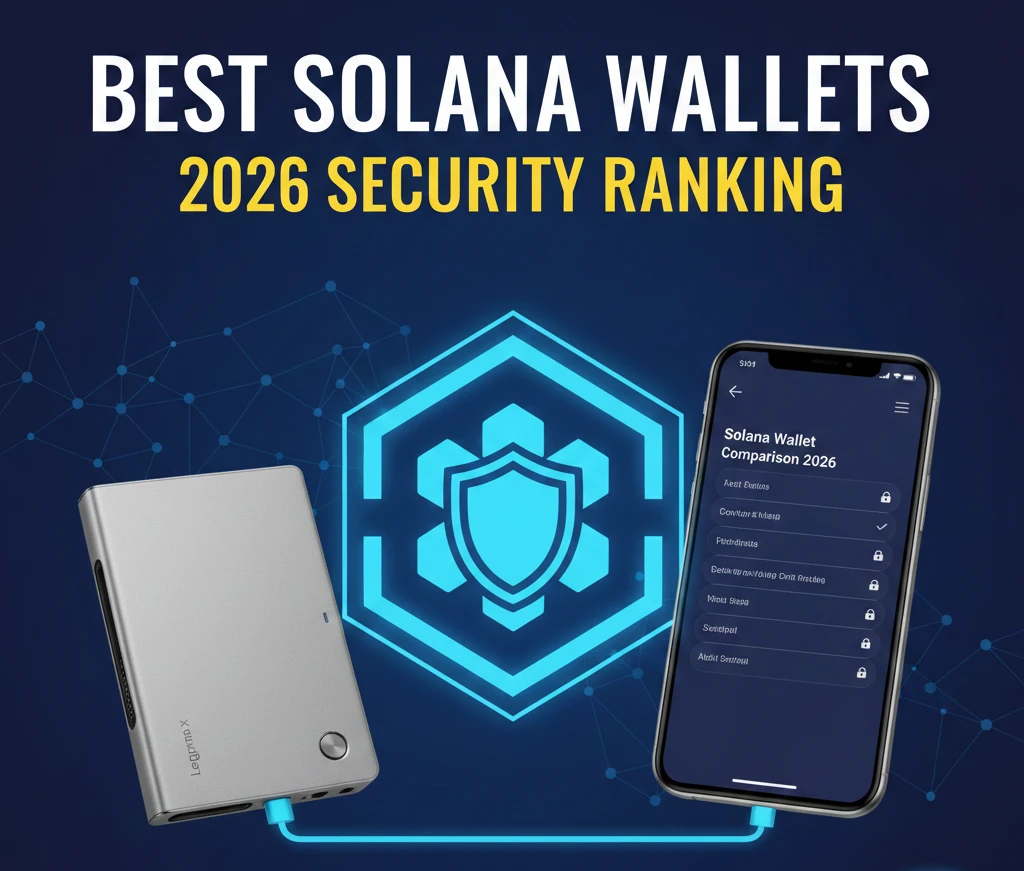
Best Solana Wallets for 2026: Security Comparison Table
Honestly, if you’re holding any serious amount of SOL or actively using Solana’s DeFi apps, your wallet choice isn’t just about convenience—it’s your main security fence. Forget the hype about “moon-talk” for a minute; the real money is made by not getting hacked.
In the fast-moving Solana ecosystem, where transactions are quick and new tokens pop up daily, picking the wrong wallet can be a costly mistake. Our focus here is simple: Security, Usability, and Trust. You want a wallet that keeps your private keys safe and connects smoothly to the apps you need, without forcing you to be a cryptography expert.
This is your simple, no-fluff guide to the Best Solana Wallets for 2026, built for the seasoned crypto investor and the skeptical beginner alike.
Why Your Solana Wallet Choice Matters Now
We’re already in a new cycle of blockchain security. With Solana’s speed attracting more developers and, unfortunately, more scammers, a simple browser extension isn’t enough anymore. You need to know where your keys are stored, what kind of security features are built-in, and how easily a compromised device could put your funds at risk.
The core question is always: Who controls the private keys? If it’s you, you have a non-custodial wallet. If it’s an exchange or a third party, it’s custodial, and you’ve introduced a single point of failure. For self-custody on Solana, you essentially have two main categories:
- Hot Wallets (Software): Convenient, always online, best for small-to-medium active balances and daily dApp use. Think of it like cash in your physical wallet.
- Cold Wallets (Hardware): Secure, private keys stay offline, essential for large, long-term holdings. This is your bank vault.
Cold Storage: The Safest Place for Your SOL
For any meaningful amount of Solana, a hardware wallet is simply non-negotiable. Why? Because your private keys—the actual, secret codes that control your funds—never touch the internet. Even if your computer is completely riddled with malware, the hacker still can’t sign a transaction without physically accessing the device and entering your PIN.
1. Ledger Nano X & Stax
Ledger is the industry standard for a reason: battle-tested security. It uses a specialized chip (a Secure Element) similar to those in passports and bank cards.
- Experience Insight: In my view, the Ledger Nano X hits a sweet spot with its Bluetooth feature, making it far easier to use with mobile Solana wallets like Phantom or Solflare. The newer Ledger Stax adds a premium touchscreen experience, which simplifies transaction signing for complex DeFi actions.
- Security Feature: The Secure Element (CC EAL5+ certified) and a required physical button press for confirmation.
- Best For: Serious long-term investors and those staking large amounts of SOL.
2. Trezor Model T / Safe 3
Trezor is the champion of the open-source community. If transparency is your biggest security signal, Trezor is probably the better choice. Its firmware is completely open-source, meaning any developer can audit the code to check for backdoors or vulnerabilities.
- Security Feature: Completely open-source firmware and a trusted screen on the device itself to verify transaction details before you sign.
- Best For: Privacy advocates, engineers, and users who prioritize open-source verification above all else.
3. Tangem Wallet (Card-Based)
This is a unique, seed-phrase-less approach to cold storage. Tangem uses a secure chip embedded in a physical card (NFC-enabled) to function as a wallet. You tap the card to your phone to sign transactions.
- Security Feature: Eliminates the risk of losing a 12/24-word seed phrase, relying on a secure chip and a key stored across multiple cards.
- Best For: Beginners who fear losing or compromising a written seed phrase, and those who want a simple, portable cold-storage solution.
Hot Wallets: Best Solana Wallets for Daily DeFi
Hot wallets are necessary for the everyday user—swapping tokens, buying NFTs, and interacting with decentralized applications (dApps). The key is choosing one with a clean interface and robust security features like auto-lock and scam warnings.
1. Phantom Wallet: The Solana Native
Phantom remains the clear market leader. It was built specifically for Solana, and that focus shows in its smooth user experience.
- Experience Insight: Phantom is the most seamless way to interact with the Solana ecosystem. It has the cleanest interface for viewing and managing NFTs and provides built-in token swapping and staking features that just work. Unlike some multi-chain wallets, Phantom feels fast and native on Solana.
- Security Feature: Auto-locking, biometric authentication on mobile, and a clear, simple transaction signing screen. It also supports connection with Ledger hardware wallets.
- Best For: Daily Solana dApp interaction, NFT trading, and DeFi users who want an easy-to-use wallet that supports a Ledger.
2. Solflare Wallet: The All-Rounder
Solflare is one of the earliest and most robust Solana wallets. It offers multi-platform support (web, mobile, and browser extension) and is highly trusted in the ecosystem, often preferred by more advanced users.
- Security Feature: Supports a 24-word recovery phrase (more options than the standard 12 words), is non-custodial, and has excellent, reliable Ledger integration.
- Best For: Users who need flexibility (desktop, web, and mobile) and prioritize robust Ledger integration for staking SOL.
3. Exodus Wallet: Best for Beginners
Exodus stands out for its beautiful, beginner-friendly interface and support for a huge number of assets across many blockchains. If you’re new to crypto or holding assets other than SOL, Exodus makes multi-chain management simple.
- Security Feature: Strong password/biometric protection and seamless integration with Trezor hardware wallets (on desktop) and Ledger (on mobile).
- Best For: Absolute beginners and users with diverse, multi-chain portfolios who value a polished, simple user experience.
Solana Wallet Security Comparison: 2026 Edition
For clarity and E-E-A-T, here is a quick breakdown of how the top wallets stack up on the most critical security point: key storage.
| Wallet Name | Type (Hot/Cold) | Private Key Storage | Best Use Case | Risk Level |
| Ledger Nano X | Cold / Hardware | Secure Element Chip (Offline) | Long-Term HODL & Staking | Very Low |
| Trezor Model T | Cold / Hardware | Secure Chip (Offline, Open Source) | Long-Term HODL & Open Source Trust | Very Low |
| Phantom | Hot / Software | Encrypted on Your Device | Daily DeFi, Swaps, NFTs | Medium |
| Solflare | Hot / Software | Encrypted on Your Device | Active Staking, Advanced Users | Medium |
| Tangem | Cold / Hardware | Encrypted on NFC Card (Offline) | Seed-Phrase-less Storage, Portability | Very Low |
| Exodus | Hot / Software | Encrypted on Your Device | Multi-Chain Management, Beginners | Medium |
Key Insight: A “Medium” risk for a hot wallet doesn’t mean it’s unsafe. It simply means a sophisticated hacker could steal your keys if your computer is compromised and you sign a malicious transaction. This risk is entirely removed when you use a hot wallet in conjunction with a hardware wallet like Ledger or Trezor.
People Also Ask (FAQ)
What makes a hardware wallet safer than a software wallet?
The difference is simple: isolation. A software wallet’s keys are stored on a device that is always connected to the internet (a “hot” device). A hardware wallet’s keys are stored on a specialized chip inside the device that is air-gapped from the internet. When you sign a transaction, the details are sent to the hardware wallet, you approve it offline, and only the signed, finished transaction is sent back to the internet. This means even if you visit a scam website, your private key is never exposed.
Should I use Phantom or Solflare with my Ledger?
You should absolutely use your Ledger with a software wallet like Phantom or Solflare. Phantom is generally seen as having the most user-friendly interface for NFTs and simple swaps on Solana. Solflare has been around longer and offers a very reliable experience for staking. Both work seamlessly with Ledger, so the choice comes down to interface preference. Use the software wallet for the interface, and the Ledger for the key signing.
Can I stake SOL from a cold wallet?
Yes, you can. You connect your hardware wallet (like Ledger) to a software interface (like Solflare or Phantom). The software wallet prepares the staking transaction, but the critical signing of that transaction happens securely and offline on your hardware device. Your private keys never leave the hardware device, but your SOL can still be staked and earning rewards.
The Final Word
If you’re looking at Best Solana Wallets for 2026, the answer is really a combination: A Hardware Wallet (Ledger or Trezor) + a Software Wallet (Phantom or Solflare).
The best defense in crypto is layering your security. Use the hot wallet for the dApp interface and small amounts, and use your cold wallet for locking down your main investment. Don’t fall for the idea that convenience should ever outweigh security.
If you’re exploring this, start by asking yourself how much SOL you plan to hold, then buy a hardware wallet before you transfer any meaningful amount of crypto.
Crypto investors can explore the top 5 undervalued cryptocurrencies and understand why crypto is crashing in today’s volatile market. Learn strategies on how to hedge crypto with futures while discovering what crypto Elon Musk owns. For smarter investing, grasp what APY means in crypto to maximize returns and manage risk effectively.

Financial Analyst Iqra Zahoor provides data-driven crypto analysis & strategies. Guiding you from market trends to informed investment decisions.