Cryptocurrency Mining with Solar Power
Is Your Location Actually Suitable for Solar Mining? Check This First
The single biggest mistake people make when planning a solar mining operation is buying hardware before checking their location’s solar resource. Solar panels produce electricity in proportion to how much sunlight hits them. In Phoenix, Arizona, a 400W panel produces around 2.6 kWh per day on average. In Seattle, Washington, that same panel produces around 1.4 kWh — barely half as much.
Peak sun hours is the term used to measure usable solar energy. One peak sun hour equals 1,000 watts of solar irradiance per square meter — essentially, how many hours per day your location receives enough sunlight for panels to produce at their rated output. This number varies dramatically by location and season.
For continuous Bitcoin mining — where your miner runs 24 hours a day, every day — you need enough solar production during daylight hours to both run the miner AND charge your batteries for overnight operation. If your location cannot produce enough energy in daylight to do both, your system will drain progressively and eventually shut down.
Location Assessment: Go/No-Go by US Region
| Location / State | Avg Peak Sun Hours/Day | Winter Low (Dec–Feb) | Solar Mining Verdict | Key Challenge |
| Phoenix / Tucson, AZ | 6.5 hrs | 5.5 hrs | ✅ Excellent | Summer heat management for ASICs |
| Las Vegas / Reno, NV | 6.2 hrs | 4.8 hrs | ✅ Excellent | Grid permits in some areas |
| Dallas / Midland, TX | 5.8 hrs | 4.2 hrs | ✅ Strong | Hail damage risk, insurance cost |
| Denver, CO | 5.5 hrs | 4.0 hrs | ✅ Good | Snow on panels, elevation wind |
| Los Angeles, CA | 5.5 hrs | 4.8 hrs | ⚠️ Good but expensive | High equipment + permit costs |
| Atlanta, GA | 5.0 hrs | 3.8 hrs | ⚠️ Marginal | High humidity, heat, hurricane season |
| Chicago, IL | 4.4 hrs | 2.8 hrs | ⚠️ Marginal | Long winters kill ROI significantly |
| New York City, NY | 4.2 hrs | 3.0 hrs | ❌ Poor + tax risk | NY mining excise tax, low sun, high costs |
| Seattle, WA | 3.5 hrs | 1.8 hrs | ❌ Unsuitable | Chronic overcast, needs 3x more panels |
| Anchorage, AK | 2.8 hrs | 0.6 hrs | ❌ Not viable | Near-zero winter production |
How to find your exact peak sun hours: Go to pvwatts.nrel.gov (free tool from the National Renewable Energy Laboratory). Enter your zip code and it will show you monthly solar production estimates for your specific location. Look at the December and January numbers — those are your worst-case months. Your entire system must be designed around those worst-case numbers, not the summer averages.
Understanding Bitcoin’s supply dynamics is critical when calculating solar mining profitability. The Bitcoin halving directly impacts your ROI timeline by reducing block rewards from 3.125 to 1.5625 BTC in 2028. When sizing your solar array, you must model profitability across halving cycles—not just current prices. A 6kW solar setup that breaks even in 4 years today may take 7+ years post-halving if Bitcoin’s price doesn’t appreciate proportionally. This is why our calculator includes a “halving adjustment” factor that most solar mining guides ignore.
Which Cryptocurrency Can You Actually Mine with Solar Power?
Not every cryptocurrency can be profitably mined with solar power. The economics depend heavily on the coin’s mining algorithm, how competitive the network is, and whether the energy efficiency of available hardware makes sense at your expected electricity cost (which for solar is essentially zero per kWh once the system is paid off, but the capital cost of the system is your real energy cost).
Bitcoin Mining (SHA-256 Algorithm) — The Primary Choice
Bitcoin uses the SHA-256 algorithm — a mathematical puzzle that requires specialized computers called ASICs (Application-Specific Integrated Circuits) to solve. ASICs are custom chips designed exclusively for Bitcoin mining. They cannot be used for anything else, and general-purpose computers (CPUs or GPUs) cannot mine Bitcoin profitably.
Bitcoin is the most logical target for solar mining for two reasons: ASICs are power-hungry (3,000–6,000 watts each) and run continuously, making them ideal consumers of a constant solar power source. And Bitcoin’s value and liquidity mean your earned coins can be readily converted or held.
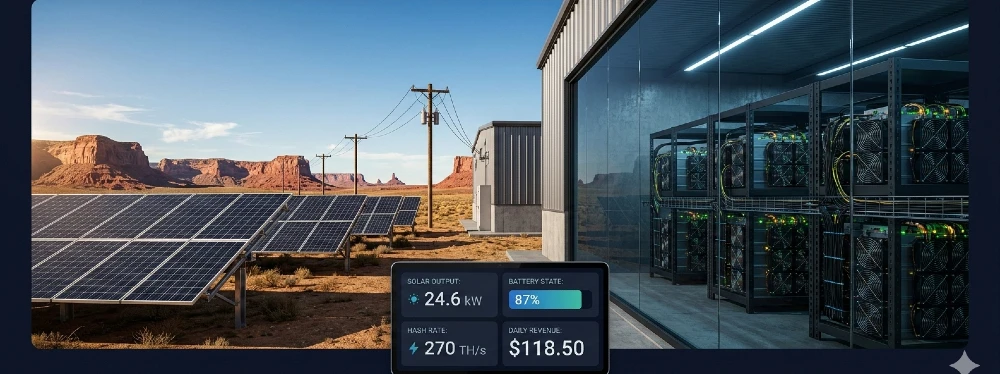
The current generation of ASICs to consider: The Antminer S21 XP (270 TH/s at 3,645W) and Antminer S21 Hydro (335 TH/s at 5,360W) from Bitmain represent the most efficient hardware available in 2025. The older S19 series is still operational but consumes more electricity per terahash — a critical metric when your solar system’s output is your constraint.
ASIC Miner Comparison for Solar Power Systems
| Miner Model | Hash Rate | Power Draw | Efficiency | Ideal Solar Setup Size | Est. Daily Revenue* |
| Antminer S21 Hydro | 335 TH/s | 5,360W | 16 J/TH | 6.5 kW solar + 20 kWh battery | ~$14–22/day |
| Antminer S21 XP | 270 TH/s | 3,645W | 13.5 J/TH | 4.5 kW solar + 15 kWh battery | ~$9–16/day |
| Whatsminer M60S | 186 TH/s | 3,441W | 18.5 J/TH | 4.2 kW solar + 13 kWh battery | ~$7–12/day |
| Antminer S19 XP (older) | 141 TH/s | 3,010W | 21.5 J/TH | 3.7 kW solar + 12 kWh battery | ~$5–9/day |
| Goldshell KD-MAX (Kadena) | 40.2 TH/s | 3,350W | 83 J/TH | 4.1 kW solar + 12 kWh battery | Varies widely |
*Revenue estimates based on BTC at approximately $85,000 and current network difficulty. These numbers change constantly as Bitcoin price and mining difficulty fluctuate. Never plan a system assuming these numbers will hold.
Alternatives to Bitcoin Mining on Solar
- Kaspa (KAS) — GPU mining: Kaspa uses the kHeavyHash algorithm and is GPU-mineable. High-end GPUs like the NVIDIA RTX 4090 (450W) or AMD RX 7900 XTX (330W) can mine Kaspa. GPU rigs consume significantly less power than ASICs, making them easier to power with a smaller solar system. However, Kaspa’s market is smaller and more volatile than Bitcoin’s.
- Alephium (ALPH) — GPU mining: Another GPU-minable coin using the Blake3 algorithm. Similar power profile to Kaspa GPU mining. Lower barrier to entry from a solar system sizing perspective.
- Ethereum Classic (ETC) — GPU mining: Uses the Etchash algorithm, GPU-compatible. Lower revenue than Bitcoin ASIC mining but much lower power and system cost requirements.
What to do: For first-time solar miners, start with one ASIC or a small GPU rig rather than scaling immediately. One Antminer S21 XP running on a well-designed 4.5 kW solar system is manageable. Ten of them require a 45 kW system — a fundamentally different engineering challenge.
The Four Components of a Solar Mining System — What Each One Does and What Fails
Component 1: Solar Panels — How Many Do You Actually Need?
Solar panels convert sunlight into DC electricity. For mining purposes, you need enough panel capacity to produce your miner’s daily energy requirement within your available peak sun hours — plus enough extra to charge your batteries for overnight operation.
The Panel Sizing Formula for 24/7 Mining
Formula: (Miner wattage × 24 hours × 1.3 efficiency loss factor) ÷ (peak sun hours × 0.8 panel efficiency) = minimum panel wattage required
Example for one Antminer S21 XP (3,645W) in Phoenix, Arizona (5.5 winter peak sun hours):
- Daily energy needed: 3,645W × 24h = 87.5 kWh
- With efficiency losses (inverter, wiring, battery round-trip): 87.5 × 1.3 = 113.7 kWh needed from panels
- Panel output in Phoenix winter: 5.5 hours × 0.8 = 4.4 effective production hours per panel-kW
- Panel capacity needed: 113.7 kWh ÷ 4.4 = 25.8 kW of solar panels
- With 400W panels: 25.8 kW ÷ 0.4 kW = 65 panels minimum
Now run the same formula for Seattle (1.8 winter peak sun hours):
- Panel output in Seattle winter: 1.8 × 0.8 = 1.44 effective production hours
- Panel capacity needed: 113.7 ÷ 1.44 = 79 kW of solar panels
- With 400W panels: 197 panels — over 3x more than Arizona for identical mining output
This is why location matters so much. The same miner that needs 65 panels in Arizona needs 197 panels in Seattle. At roughly $200–250 per panel installed, that difference alone is $26,500 in additional hardware cost — before touching inverters, batteries, or wiring.
What not to do: Do not use summer sun hours to size your panel array. Summer production in Seattle looks acceptable; winter production is catastrophically low. Size everything around your December and January numbers from pvwatts.nrel.gov.
Component 2: Battery Storage — Sizing for 5-Day Autonomy
Batteries store the excess solar energy produced during daylight for use at night and during cloudy periods. For 24/7 mining, your battery bank needs to cover overnight operation (approximately 12–14 hours) plus provide buffer for consecutive cloudy days.
The 5-Day Autonomy Rule: Size your battery bank to power your miners for 5 consecutive days with no solar input. This sounds excessive but is critical in regions that experience multi-day storm events, heavy winter cloud cover, or seasonal low-production periods. A 3-day battery bank fails during a 4-day rainstorm. A 5-day bank keeps your miners online through the vast majority of weather events.
Battery Bank Sizing Formula
Formula: (Miner wattage × 120 hours) ÷ (Battery voltage × Depth of Discharge × Round-trip efficiency) = Required battery capacity in amp-hours
Example for one S21 XP (3,645W) with a 48V LFP battery system at 80% depth of discharge:
- Energy needed for 5 days: 3,645W × 120h = 437,400 Wh = 437.4 kWh
- Accounting for 80% DoD and 95% round-trip efficiency: 437.4 ÷ (0.80 × 0.95) = 575 kWh usable
- At 48V system voltage: 575,000 Wh ÷ 48V = 11,979 Ah of battery capacity needed
- In practical terms: approximately 24–30 units of 200Ah 48V LFP battery modules
| Reality check: A 5-day autonomy battery bank for a single S21 XP will cost between $35,000 and $65,000 depending on battery chemistry and brand. This is often more expensive than the miner itself. This is why solar mining makes most financial sense at scale — the battery cost per miner drops significantly when you spread it across 5–10 mining units sharing the same bank. |
Battery Chemistry: Which Type Is Safe for 24/7 Mining Load?
| Battery Type | Cycle Life (80% DoD) | Thermal Runaway Risk | Cost per kWh | Best For Mining? | Verdict |
| LFP (Lithium Iron Phosphate) | 3,000–6,000 cycles | Very Low — safest chemistry | $250–400/kWh | ✅ Yes — preferred | Best overall for 24/7 mining load |
| NMC (Nickel Manganese Cobalt) | 1,000–2,000 cycles | High — can ignite at high temps | $200–350/kWh | ❌ Avoid for mining | Too dangerous at high C-rates |
| Lead-Acid (AGM/Gel) | 300–500 cycles | Very Low | $80–150/kWh | ❌ Not suitable | Short cycle life, heavy, slow charge |
| Sodium-Ion (emerging) | 4,000+ cycles | Extremely Low | $180–280/kWh (falling) | ⚠️ Promising but new | Watch for 2025–2026 products |
| Tesla Powerwall 3 (LFP-based) | 10-year warranty | Low | $11,500 installed (13.5 kWh) | ✅ Yes with caveats | Great for residential; limited C-rate |
Why LFP is the only realistic choice for mining: Cryptocurrency mining applies a constant, high-current draw to batteries — often at 0.5C to 1.0C rates (meaning drawing 50–100% of the battery’s capacity per hour). NMC lithium batteries, which are used in many consumer electronics and some EVs, have thermal runaway risk at high C-rates and elevated temperatures. For an enclosed mining shed in Arizona where ambient temperatures can reach 110°F, NMC batteries represent a genuine fire risk. LFP chemistry does not experience thermal runaway under these conditions and maintains stable performance at high temperatures.
Component 3: Inverter — The Most Commonly Undersized Part
An inverter converts DC electricity from your solar panels and batteries into AC electricity that your ASIC miners use. This sounds simple but is the most technically critical and most commonly misconfigured component in solar mining setups.
The problem: residential hybrid inverters — the type sold at most solar retailers — are designed for intermittent loads. A home might draw 5 kW for 2 hours of cooking, then drop to 500W for hours. An ASIC miner draws its rated wattage continuously, 24 hours a day. Residential inverters run at 100% load for extended periods suffer from capacitor degradation and early failure.
| Inverter Type | Best Use Case | Problem for Mining | Recommended Model |
| String Inverter (residential) | Small homes, 5–15 panels | Clipping losses, not 24/7 rated | SMA Sunny Tripower (if must use) |
| Microinverter | Shade-heavy rooftops | Expensive for high-wattage mining loads | Enphase IQ8H (small setups only) |
| Hybrid Inverter (solar + battery) | Grid-tied with battery backup | Consumer-grade units fail at 24/7 load | Victron MultiPlus-II 48/5000 ✅ |
| Off-Grid Inverter/Charger | Full off-grid mining setups | Requires careful sizing for ASIC startup surge | Victron Quattro 48/10000 ✅ |
| Industrial 3-Phase Inverter | Large farms (10+ ASICs) | High cost, requires licensed electrician | SMA Sunny Tripower Core1 (50 kW+) |
The Victron MultiPlus-II and Quattro lines are the industry standard for off-grid and hybrid systems with continuous high loads. They are rated for 24/7 operation at full load, have a 5-year warranty for commercial use, and integrate directly with Victron’s battery monitoring system (Cerbo GX), which allows remote monitoring of your entire power system from a smartphone app.
What not to do: Do not buy a residential hybrid inverter (Enphase, SolarEdge SE series, Growatt residential) for a continuous mining load. These units are designed to 80% load maximum continuous, and running them at 100% for months will cause failure within 1–3 years. The replacement cost of $3,000–8,000 will eliminate your mining profits for months.
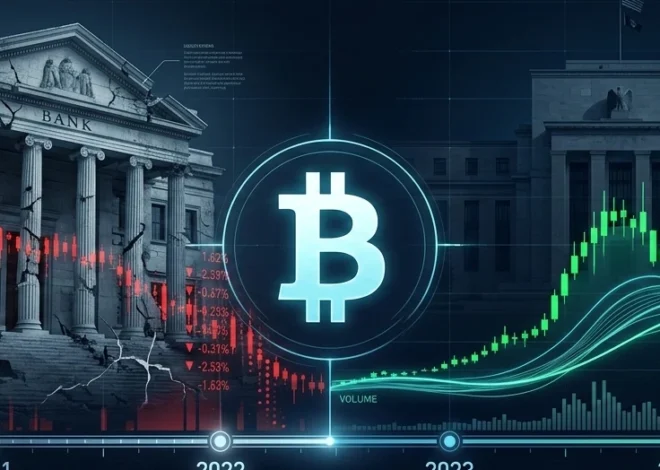
Your solar mining operation’s profitability doesn’t exist in a vacuum—it’s directly tied to macroeconomic conditions that drive Bitcoin’s price. When interest rates rise, risk assets like Bitcoin typically decline, extending your mining payback period by months or years. However, solar mining offers a unique hedge: while grid miners face rising electricity costs during inflationary periods, your LCOE (Levelized Cost of Energy) remains fixed after installation. This creates an asymmetric advantage during economic uncertainty that pure grid miners cannot match.
Component 4: MPPT Charge Controller — What It Does and Why It Matters
An MPPT (Maximum Power Point Tracking) charge controller sits between your solar panels and your battery bank. It constantly adjusts the electrical load it presents to the panels to extract the maximum possible power at any given light level — efficiently converting panel voltage (often 200–400V DC) down to battery voltage (48V or 400V depending on system design).
For mining systems, MPPT efficiency directly affects how much of your panel capacity actually reaches your batteries. A high-quality MPPT controller operates at 97–99% efficiency. A cheap unit may operate at 90–93% — losing 6–9% of your total solar production constantly.
- Recommended: Victron SmartSolar MPPT 250/100 for systems up to 13 kW of panels. For larger systems, multiple controllers in parallel or industrial alternatives.
- What to check: The controller’s maximum input voltage must exceed your panel array’s open-circuit voltage (Voc) in cold weather — cold temperatures increase panel voltage. Calculate your winter Voc before selecting a controller.
- Solar mining requires long-term commitment—equipment, batteries, and panels represent sunk costs you cannot recover quickly. This makes market sentiment analysis critical for your “kill switch” decisions. When fear dominates markets (Crypto Fear & Greed Index below 20), even efficient solar operations may become unprofitable if Bitcoin drops below your all-in production cost of $18K-25K per BTC. Our guide includes specific sentiment thresholds for temporarily shutting down operations versus holding through downturns, protecting your hardware from unnecessary wear during unprofitable periods.
Thermal Management: Why Solar Mining Rigs Die Early and How to Prevent It
Heat is the primary killer of solar mining hardware. ASIC miners generate enormous heat — a single S21 XP produces approximately 3,645 watts of heat that must be removed from the mining environment. Batteries degrade rapidly above 95°F (35°C). Inverters throttle output and fail prematurely when ambient temperature exceeds their rated range.
Most solar mining guides show pictures of miners in wooden sheds or metal containers. What they do not show is what those structures look like six months later when the inverter failed, the batteries degraded to 60% capacity, and one of the ASICs shut down permanently from thermal throttling.
ASIC Cooling: Air-Cooled vs. Hydro-Cooled
- Air-cooled ASICs (S21 XP, Whatsminer M60S): These miners use high-speed fans to push air through internal heatsinks. They require inlet air at 65°F or below and exhaust hot air at 100–140°F. In a sealed structure, this means you need to move enormous volumes of air through the space. Calculate your required CFM (cubic feet per minute) airflow using this formula: (Total miner BTU output ÷ 1.1) ÷ temperature rise allowed. For 5 miners at 3,645W each (12,430 BTU/hr each), targeting a 15°F temperature rise: (62,150 BTU/hr ÷ 1.1) ÷ 15 = 3,764 CFM minimum airflow.
- Hydro-cooled ASICs (S21 Hydro): The Antminer S21 Hydro uses liquid cooling — a water loop that carries heat away from the chips to an external radiator. This eliminates the need for massive airflow and allows much quieter, more controlled operation. The tradeoff is higher hardware cost ($8,000–12,000 per unit vs. $3,000–5,000 for air-cooled) and plumbing complexity. For solar setups in hot climates (Arizona, Nevada, Texas), the hydro-cooled approach often justifies its cost through longer hardware life and lower thermal management infrastructure.
What not to do: Do not place ASICs in an enclosed metal shipping container without proper active ventilation. Metal containers in direct sun can reach 140–160°F internally on a summer day — far beyond what any mining hardware tolerates. If you use a container, you need dedicated air conditioning (which adds another 3,000–5,000W to your power budget) or the hydro-cooling approach with external radiators.
Battery Temperature Management
LFP batteries perform optimally between 59°F and 95°F (15°C to 35°C). Above 95°F, they experience accelerated capacity degradation. Below 32°F, charging efficiency drops dramatically and some BMS systems prevent charging entirely to protect cells.
- In hot climates (AZ, NV, TX): Install batteries in a shaded, insulated enclosure with passive or active ventilation. A well-insulated battery enclosure can stay 20–30°F cooler than ambient on a hot day. Avoid direct sun on battery enclosures at all costs.
- In cold climates: Install battery heating pads (many LFP BMS systems support this) that activate when battery temperature drops below 41°F. Mining during cold weather without battery heating will degrade cells significantly faster than expected.
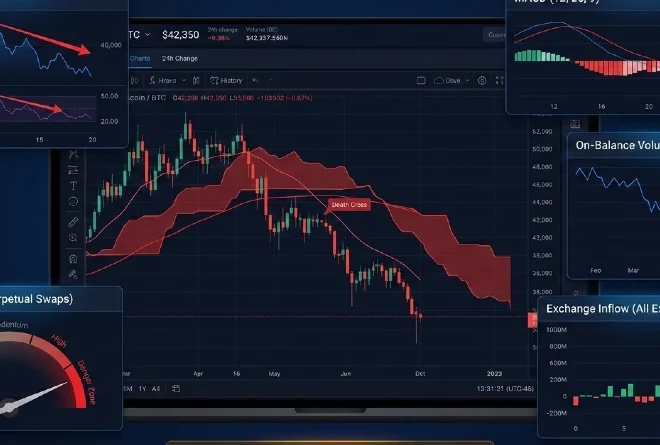
- Knowing when to expand or contract your solar mining operation requires reading Bitcoin’s technical landscape. During confirmed downtrends (200-week MA resistance, bearish RSI divergence), adding more ASICs to your solar array is contrarian—and often profitable. Conversely, euphoric periods with overheated RSI may signal peak hardware prices and compressed mining margins. We analyze how to use support/resistance levels to time your hardware purchases and solar expansion phases, turning technical analysis into operational strategy.
The Real Financial Calculation: Total Cost of Ownership Over 10 Years
Most solar mining guides show an optimistic 2–3 year payback period based on current Bitcoin prices and current network difficulty. This is misleading because it ignores several guaranteed costs that occur over the life of the system.
Full Cost Breakdown for a Single-ASIC Solar Mining System
- ASIC hardware (S21 XP): $3,000–5,000. Expected lifespan with proper thermal management: 4–6 years. Without proper cooling in hot climates: 1–3 years.
- Solar panels (25 kW for one S21 XP in Arizona): $15,000–25,000 installed including racking and wiring. Panels degrade approximately 0.5% per year in output. At year 10, expect 95% of original output.
- Battery bank (5-day autonomy for one S21 XP): $35,000–65,000 installed. LFP batteries at 80% depth of discharge should last 8–12 years with proper temperature management. Budget for replacement at year 10.
- Inverter (Victron Quattro): $3,500–5,500 for the unit plus installation. At 24/7 operation: 7–10 year lifespan realistic with proper cooling. Budget for one replacement over 10 years.
- Electrical work, permits, monitoring: $3,000–8,000 depending on location and system complexity. In California, permitting alone can run $2,000–4,000.
- Insurance rider for commercial mining equipment: Standard homeowners insurance typically excludes commercial mining operations. A commercial equipment rider adds $800–2,500/year to your policy. Over 10 years: $8,000–25,000 additional cost.
- Ongoing maintenance (cleaning, connection checks, firmware updates): Budget $500–1,000/year. Ten years: $5,000–10,000.
Total 10-year cost estimate for a single-S21 XP solar mining setup: $70,000–145,000.
Compare this to running the same S21 XP on grid power at $0.08/kWh (industrial rate in Texas):
- Annual electricity cost: 3,645W × 8,760 hrs × $0.08 = $2,556/year
- 10-year electricity cost: $25,560
- Hardware and maintenance over 10 years (no solar system): $15,000–25,000
- Total 10-year grid mining cost: $40,000–50,000
The honest conclusion: In low-electricity-cost locations (Texas at $0.08/kWh, Kentucky at $0.07/kWh), grid mining is often more financially efficient than solar mining when you account for the full capital cost of the solar system. Solar mining makes the most financial sense in locations with high grid electricity prices ($0.15/kWh or more) — like California, Hawaii, or the Northeast — where grid electricity costs alone would exceed $40,000 over 10 years for a single ASIC.
Scenario Comparison: Solar Mining ROI by Setup and Location
| Scenario | Location | Hardware | System Cost | Est. Monthly Revenue | Payback Period | 10-Year Profit |
| Budget Off-Grid | Arizona | 1x S21 XP | $18,000 total | $280–420/mo | 4–6 years | $15,000–25,000 |
| Mid-Range Hybrid | Texas | 3x S21 XP | $45,000 total | $840–1,260/mo | 4–5 years | $55,000–80,000 |
| Large Off-Grid Farm | Nevada | 10x S21 Hydro | $180,000 total | $4,200–6,600/mo | 3–4 years | $300,000–500,000 |
| Poor Location Setup | Seattle | 1x S21 XP | $22,000 total | $90–150/mo | Never (12+ yrs) | Net loss likely |
| Important caveat: All revenue projections assume Bitcoin price and network difficulty remain constant. In reality, both change constantly. Network difficulty has increased approximately 50–100% per year in recent bull markets. A setup that earns $420/month today may earn $200/month in 18 months if difficulty doubles without a proportional price increase. Always model your worst case: Bitcoin at 50% of current price, difficulty at 2x current level. |
Why Solar Mining Operations Fail: The 6 Most Common Mistakes
Failure 1: Battery Bank Undersized for Winter Operation
The most common and costly mistake. A battery bank sized for a 3-day autonomy based on summer sun hours runs out of power during a 4-day winter storm. Once the battery bank is depleted below the inverter’s low-voltage disconnect threshold, the miners shut down. If the storm continues, the system cannot recover until sunlight returns. Repeated deep discharges below 20% state of charge rapidly degrade LFP battery capacity — each deep discharge cycle permanently reduces the bank’s usable capacity.
Fix: Size for 5-day autonomy using your December peak sun hours from PVWatts. Do not compromise on battery capacity. It is the most expensive single component of a solar mining system for a reason — it is also the one that determines whether your system works year-round.
Failure 2: Residential Inverter Burning Out at 18 Months
A homeowner buys a Growatt 6kW hybrid inverter (a quality residential unit) for their solar mining shed. It runs the S21 XP at 100% load for 18 months, then fails. The replacement cost is $2,500 plus labor. Meanwhile, a Victron MultiPlus-II costs $1,800 more upfront but is rated for exactly this application and will last 7–10 years under the same conditions.
Fix: Use only inverters specifically rated for continuous duty at 100% load. Victron Energy is the industry standard for this application. Check the inverter’s duty cycle rating before purchase — not its peak rating.
Failure 3: No Generator Backup for Extended Dark Periods
Even a well-designed 5-day battery bank will eventually face a 6-day or 7-day low-production event in winter. Without a generator backup, the system shuts down and miners go offline — losing mining revenue for days or weeks.
Fix: Install a propane or natural gas generator as a backup charging source that activates automatically when battery state of charge drops below 20%. A 6,000–8,000W generator ($1,500–3,000) can recharge a depleted battery bank in 6–8 hours while powering the miners simultaneously. The Victron inverter/charger systems support automatic generator start integration through an Automatic Transfer Switch (ATS).
Failure 4: Ignoring Startup Surge Current from ASICs
Inrush current is the large but brief spike in electrical current that occurs when an ASIC miner powers on. An S21 XP drawing 3,645W continuous can draw 4–6x that (15,000–22,000W) for the first 100–200 milliseconds at startup. If your inverter cannot handle this inrush, it either trips offline or is damaged over repeated startups.
Fix: Size your inverter to handle at least 3x your continuous miner load for surge capacity. The Victron Quattro 48/10000 (10kVA continuous, 20kVA peak) handles single-ASIC inrush comfortably. For multiple ASICs, use staggered startup sequences — bring miners online one at a time with 30-second delays, never all simultaneously.
Failure 5: Poor Wiring Causing Voltage Drop and Heat
The distance between your battery bank and your inverter, and between your inverter and your miners, matters enormously. Undersized wiring causes voltage drop — meaning the miner receives less voltage than it needs — and generates heat in the cables, wasting energy and creating fire risk.
- Rule: For 48V battery-to-inverter connections under 10 feet: use 4/0 AWG copper cable minimum. For longer runs or higher current: consult the NEC ampacity tables and upsize accordingly.
- Rule: All connections must be torqued to specification and checked every 6 months. Loose connections arc, generating heat, damaging terminals, and in worst cases causing fires.
Failure 6: No Remote Monitoring System
A solar mining system in a separate structure (shed, container, barn) needs continuous monitoring. If the inverter trips, a miner goes offline, the battery reaches critically low state of charge, or a fire alarm triggers — you need to know immediately, not when you check the system three days later.
What to do: Install the Victron Cerbo GX monitoring unit ($200), which provides real-time data on battery state of charge, inverter status, solar production, and miner power draw through the VictronConnect app on your smartphone. Set up alerts for battery below 30% state of charge, inverter fault codes, and any loss of miner connectivity. Also install a battery temperature sensor and a CO/smoke detector with SMS alert capability.
Permits, Legal Requirements, and Insurance — What Can Shut You Down
Electrical Permits: Required in Every US State
Any solar installation exceeding 10 kW in most jurisdictions requires a permit from your local building department and inspection by a licensed electrician. Solar mining systems — which typically run 25–100+ kW — absolutely require permits. Operating without a permit is not just an administrative issue: if your unpermitted system causes a fire, your homeowner’s insurance will not pay and you may be personally liable.
- What to do: Hire a licensed electrician familiar with solar installations to design and install your system. Their permit pulls and inspection signoffs protect you legally. Budget $3,000–8,000 for professional electrical work on a single-ASIC system.
- What not to do: Do not self-install a large solar system and skip permits, even if you are electrically competent. The permit process catches critical safety issues and protects you from liability. The inspection fee is $150–500 — a negligible cost compared to the system investment.
HOA Restrictions: Check Before Spending a Dollar
If your property is in a Homeowners Association, check your CC&Rs (Covenants, Conditions, and Restrictions) before planning a solar mining operation. Many HOAs restrict visible solar panels, prohibit commercial activities on residential properties, and have noise ordinances that ASICs (which produce 70–80 dB) will violate.
Important: While most US states have solar access laws that prevent HOAs from prohibiting rooftop solar panels, these laws do not necessarily apply to ground-mounted commercial-scale systems or to the commercial mining activity itself. Research your specific state’s solar access laws and HOA bylaws before proceeding.
New York State Mining Excise Tax — And How Solar Can Exempt You
New York Senate Bill S6486D established a 2-year moratorium on certain proof-of-work cryptocurrency mining operations that use grid electricity from fossil fuels. Specifically, it targets new mining operations that use carbon-based grid electricity.
The solar exemption: Off-grid solar mining operations that do not draw from the fossil fuel grid are not subject to this moratorium. Additionally, even grid-connected hybrid systems that demonstrably use renewable energy sources have sought exemptions through the NYS Department of Environmental Conservation permitting process.
What to do if you are in New York: Consult a New York attorney specializing in energy and cryptocurrency regulation before establishing any mining operation. The regulatory landscape is actively changing and the wrong setup could result in forced shutdown and fines.
Tax Treatment of Solar Mining Equipment in the United States
This section provides general educational information about US tax treatment of solar mining equipment. Tax laws change and your specific situation requires consultation with a CPA experienced in both cryptocurrency and renewable energy taxation.
The Investment Tax Credit (ITC) for Solar Equipment
The federal Investment Tax Credit (ITC) allows you to deduct 30% of the cost of your solar panel system directly from your federal income tax liability. For a $50,000 solar system, this is a $15,000 reduction in your tax bill — not a deduction, but a direct dollar-for-dollar credit.
To qualify, the solar system must be used for a business purpose and placed in service during the tax year you claim the credit. Cryptocurrency mining is considered a business activity, and solar panels powering that business qualify for the ITC when properly documented.
- What to do: Work with a CPA who understands both the ITC (IRS Form 3468 for business use) and cryptocurrency income. Keep all receipts, installation contracts, and permits. Document that the solar system is used exclusively (or primarily) for the mining business.
- What not to do: Do not attempt to claim the ITC yourself without professional guidance. The IRS scrutinizes large solar credits, and mistakes in documentation can trigger audits. The $500–1,500 cost of a CPA’s guidance is worthwhile protection for a $10,000–30,000 tax credit.
Section 179 and Bonus Depreciation for Mining Equipment
Section 179 of the US tax code allows businesses to deduct the full purchase price of qualifying business equipment in the year of purchase, rather than depreciating it over multiple years. Both your ASIC miners and your solar equipment may qualify.
Bonus depreciation is an additional first-year depreciation deduction. Under the Tax Cuts and Jobs Act, bonus depreciation was 100% through 2022 and has been phasing down: 80% in 2023, 60% in 2024, 40% in 2025. Check current law with your CPA — the ‘One Big Beautiful Bill’ legislation discussed in 2025 proposed changes to these schedules.
Step-by-Step Setup Process: From Planning to First Block
Phase 1: Assessment (2–4 Weeks)
- Run PVWatts for your exact location: pvwatts.nrel.gov. Enter your zip code, choose fixed tilt angle (equal to your latitude), and record December and January monthly production values. These are your design constraints.
- Calculate your total power budget: (Number of ASICs × wattage each) + cooling system + monitoring + any other loads = total watts. Add 20% buffer.
- Determine system voltage: For systems under 10 kW: 48V. For systems over 10 kW: 48V is still common but 400V DC architecture is more efficient for larger setups. Decide before selecting any hardware.
- Get competitive quotes from 3+ solar installers: Tell them specifically this is for 24/7 commercial continuous load (cryptocurrency mining). If they do not ask detailed questions about your load profile, they are not the right installer for this application.
Phase 2: Hardware Procurement (4–8 Weeks)
- Purchase your ASIC miner: Buy directly from Bitmain (bitmain.com) or an authorized reseller. Avoid gray market ASICs — they may be refurbished units sold as new, with degraded hashboards. Verify the warranty terms before purchase.
- Order solar panels: Tier 1 manufacturers (JA Solar, LONGi, Canadian Solar) offer reliable 25-year performance warranties. Do not buy discount panels without verified warranties — panel degradation above 0.5%/year significantly impacts 10-year returns.
- Order battery system: For LFP batteries, trusted brands include CATL-based cells (many brands use CATL cells), Pylontech, and EG4. Verify the BMS rating for your maximum continuous discharge current before ordering.
- Order Victron inverter system: Victron MultiPlus-II for systems under 5kW continuous. Victron Quattro for larger systems. Include Cerbo GX monitoring unit, Venus OS, and remote monitoring setup.
Phase 3: Installation (1–3 Weeks with Professional Help)
- Pull all required permits: Building permit for the structure (if new), electrical permit for the solar system, and any utility interconnection paperwork if grid-tied.
- Install battery bank first: In its climate-controlled, fireproof enclosure. Test BMS communication before connecting panels or inverter.
- Install inverter and MPPT controller: Wire battery bank to inverter per manufacturer specifications. Torque all connections to spec and document with photos.
- Install solar panels: Have the electrical inspector verify all panel wiring, breakers, and rapid shutdown systems before connecting to the MPPT controller.
- Commission the system without miners first: Run the system for 24 hours monitoring battery charge and discharge, inverter efficiency, and panel output against PVWatts predictions. Fix any issues before adding mining load.
- Connect miners one at a time: Power on the first miner and monitor for 1 hour. Check temperatures, power draw, and system voltage. Add additional miners one at a time with monitoring between each addition.
- Configure mining pool: Point your ASIC to a mining pool. For Bitcoin, Foundry USA Pool (foundrydigital.com) and Antpool (antpool.com) are the two largest. Set up a Bitcoin wallet to receive payouts — use a hardware wallet (Ledger or Trezor) for any significant accumulated balance.
Securing Your Mining Rewards: Wallet Setup for Solar Miners
Your mining operation will earn Bitcoin (or other cryptocurrency) to a wallet address you specify in your mining pool account. How you secure this wallet determines whether you actually keep what you earn.
Setting Up a Mining Payout Wallet
Step 1 — Get a hardware wallet: A hardware wallet is a physical device that stores your private keys offline. The Ledger Nano X ($149) and Trezor Model T ($219) are the two most established options. Both generate and store your private keys on the device itself — they never touch an internet-connected computer.
Step 2 — Initialize the hardware wallet: Follow the manufacturer’s setup instructions exactly. You will receive a 12 or 24-word recovery phrase (called a seed phrase). Write this down on paper — never photograph it or store it digitally. This seed phrase is the master key to all funds in the wallet. Anyone who obtains it owns your Bitcoin.
Step 3 — Generate a Bitcoin receiving address: On your Ledger or Trezor, open the Bitcoin app and generate a receiving address. This is a long string of letters and numbers starting with ‘bc1’ (native SegWit format). This is the address you provide to your mining pool as your payout destination.
Step 4 — Configure payout threshold in your mining pool: Most pools allow you to set a minimum payout amount (often 0.001 BTC minimum). Set this high enough that transaction fees do not consume a significant portion of each payout (at current fee rates, 0.005 BTC or above is reasonable).
| Critical security rule: Never enter your 24-word seed phrase into any website, app, or software — for any reason. Legitimate hardware wallet software and mining pools will never ask for your seed phrase. If any website or person asks for it, they are attempting to steal your funds. Your seed phrase is only used to physically recover your hardware wallet if the device is lost or damaged. |
When to Shut Down: The Three Metrics That Tell You Solar Mining Is No Longer Viable
One of the most important things any solar mining guide can tell you is when to stop. Mining unprofitably for months while your equipment degrades costs you money every day. Here are the three specific thresholds that indicate your operation is no longer economically viable.
Kill Switch Metric 1: Mining Revenue Below Maintenance Cost
Calculate your monthly maintenance cost: insurance, monitoring fees, component replacement reserves, and your time. If your monthly Bitcoin earnings (converted to USD at current prices) fall below this maintenance cost for three consecutive months, you are mining at a net loss.
Action: Power down your miners and hold your hardware until either Bitcoin price recovers or network difficulty decreases enough to restore profitability. Do not mine at a loss indefinitely — each unprofitable month depletes your capital and adds wear to hardware without return.
Kill Switch Metric 2: Hardware Efficiency Below Network Average
Bitcoin mining profitability depends heavily on your hardware’s efficiency relative to the network average. The Antminer S21 XP at 13.5 J/TH is currently competitive. When newer generations reach 8–10 J/TH at scale, your S21 XP will be at a significant disadvantage. Check Hashrate Index (hashrateindex.com) to compare your hardware’s efficiency against the estimated network average.
Action: When your hardware’s efficiency is 30%+ worse than the estimated network average, sell or upgrade. The resale value of mining hardware declines rapidly — act sooner rather than later if you plan to sell.
Kill Switch Metric 3: System Repair Cost Exceeds 18-Month Revenue
If a major component fails — inverter, battery bank reaching end of life, ASIC hashboard failure — calculate the repair or replacement cost. If this cost exceeds 18 months of your current monthly revenue, the repair is economically questionable.
Action: At this crossroads, compare three options: (1) repair and continue, (2) sell the functional components and exit, (3) upgrade to newer, more efficient hardware while repairing. Model the numbers honestly before choosing.
Final Summary: What Makes Solar Crypto Mining Work
Solar cryptocurrency mining is technically viable and financially rewarding in the right conditions. Those conditions are specific:
- Location with 5.0+ winter peak sun hours (Arizona, Nevada, Texas, Colorado, Southern California)
- Battery bank sized for 5-day autonomy using LFP chemistry with proper BMS
- Industrial-grade inverter rated for 24/7 continuous load (Victron MultiPlus-II or Quattro)
- Current-generation ASIC (Antminer S21 XP or equivalent) for maximum efficiency
- Proper thermal management preventing hardware degradation from heat
- Generator backup for extended dark periods
- Remote monitoring through Victron Cerbo GX or equivalent
- All permits pulled and inspections passed
- Hardware wallet for mining payouts — never an exchange address
Where solar mining fails is just as predictable: wrong location, undersized batteries, residential inverters at 100% load, no cooling plan, no backup power, and no monitoring. Every expensive solar mining failure comes down to one or more of these specific mistakes.
The financial case is strongest in high-electricity-cost locations, at scale (multiple ASICs sharing one solar system), and when the system is designed by professionals who understand the difference between residential solar and commercial continuous-load applications.
The path to a successful operation: assess your location first, size the battery bank generously, invest in industrial-grade inverter hardware, manage heat aggressively, and build the monitoring infrastructure to catch problems before they become costly failures.
| Disclaimer: This article is for educational purposes only. Cryptocurrency mining profitability depends on highly volatile factors including Bitcoin price, network difficulty, and hardware availability. Solar system costs and performance vary by location and installer. This is not financial or legal advice. Consult qualified professionals — a certified solar installer, a CPA familiar with cryptocurrency, and a local attorney — before making any investment in a solar mining operation. |